
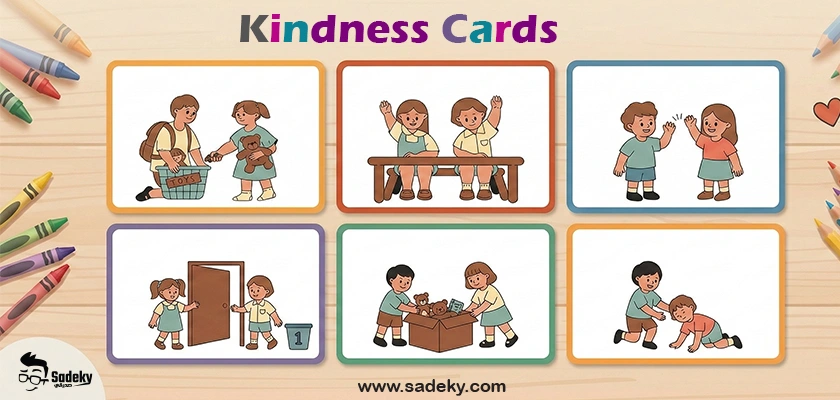
Teaching children to be kind is one of the most powerful gifts a parent or teacher can give. Yet kindness is not something children automatically do; it is a skill that needs to be practiced, encouraged, and celebrated. That is exactly where free printable kindness cards for kids come in. These simple, carefully designed cards give children a tangible, hands-on way to practice acts of kindness every single day at home, in the classroom, or out in the community.
What Are Kindness Cards for Kids Printable?
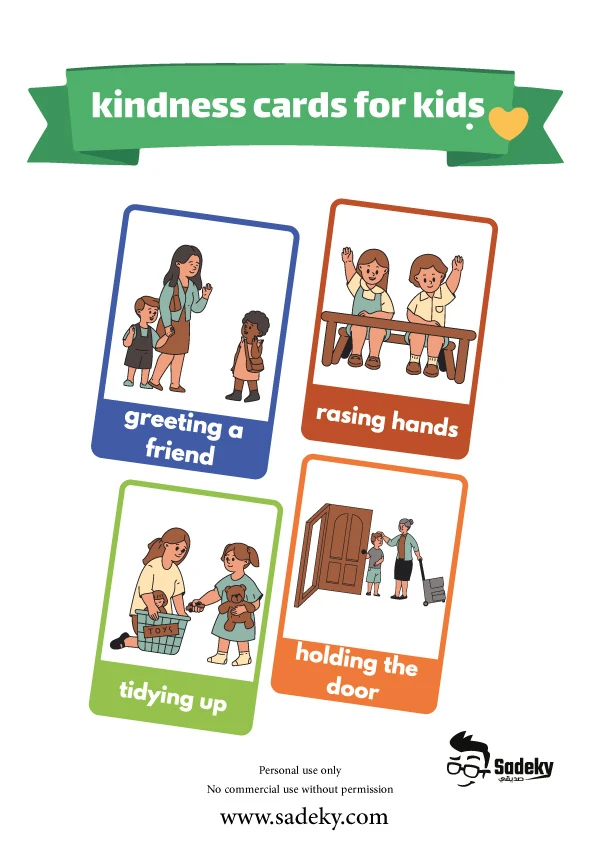
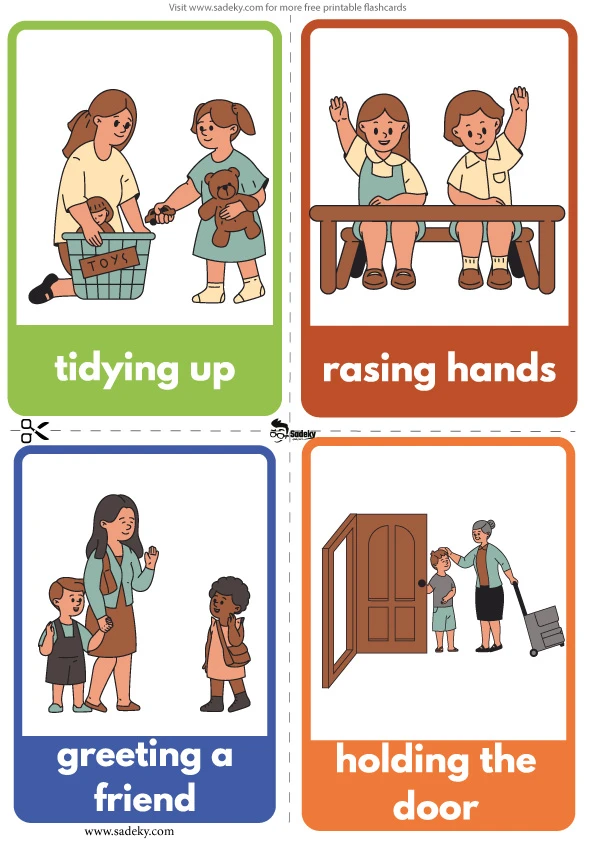
Kindness cards are small visual cards that show everyday acts of kindness in a clear and child-friendly way. Instead of abstract lessons, children see practical actions such as greeting a friend, helping someone, or holding the door. This makes kindness easier to understand, remember, and practice. The printable set in this PDF includes illustrations that children can connect with immediately, which is especially helpful for young learners and visual learners
How Teachers Can Use Kindness Cards in the Classroom
Teachers are among the most influential figures in a child’s social development. Here are five practical, zero-prep classroom strategies:
- Morning Kindness Jar: A student draws one card each morning and reads it aloud, setting an intentional, positive tone before the first lesson begins.
- Weekly Focus Challenge: Designate one card as the week’s focus. Post it on the classroom board and celebrate students “caught” completing the act.
- SEL Circle Integration: Use cards as prompts in weekly circle time. Ask: “How did it feel?” and “How do you think the other person felt? aligning directly with CASEL’s social awareness competency.
- Kindness Bingo Board: Arrange 9–16 card actions as a bingo grid. Students mark squares as they complete acts across the month, a highly engaging format for reluctant participants.
- Peer Recognition: After one student completes a kind act, another writes them a short “I noticed you…” note. This doubles the SEL value and builds peer-to-peer affirmation skills.
Related: Free Printable Daily Routine Cards
How Parents Can Use Kindness Cards at Home
- Breakfast Table Ritual: A jar of cards on the table makes kindness the first intention of the day — a habit that research links to sustained prosocial behavior.
- Lunchbox Kindness Note: Slip a card into your child’s lunchbox as a quiet midday reminder that they have the power to brighten someone’s day.
- Family Weekly Challenge: The whole family picks one card together, completes the same act, then discusses it at dinner — making kindness a shared family value.
- Kindness Calendar: Assign one card per day and let your child tick each off on a wall calendar — reinforcing the habit-building loop: cue → routine → reward.
- Kindness Journal: After each card, ask your child to draw or write about what they did and how it felt. This reflective practice deepens emotional processing and builds self-awareness.
- Role-Play for Ages 4–6: Act out the card together with younger children, a technique strongly supported in early childhood development literature.
You may like: Cute To Do Lists Printable Free
Expert-Backed Tips for Maximum Impact
Like any positive habit, kindness cards work best when they are consistent, celebrated, and tied to genuine reflection. Here are five evidence-informed principles:
- Keep them accessible: A jar on the counter is infinitely more effective than a sheet in a drawer. Accessibility signals that kindness is an everyday expectation.
- Discuss feelings, not just actions: Ask “How did you feel?” and “How do you think they felt?” — the two-question technique endorsed by Harvard’s Making Caring Common project.
- Model it yourself: Children who observe caregivers performing kind acts are substantially more likely to replicate that behavior. Pick a card yourself, visibly.
- Celebrate effort over outcome: A child who tried to be kind but found it hard is demonstrating more moral courage than one who found it easy.
- Keep it playful: The moment kindness feels like a chore, motivation disappears. Bingo boards, jars, and challenges keep it light and joyful.
Who Are These Kindness Cards For?
Sadeky’s free printable kindness cards are designed for children aged 4–12 and are ideal for:
- Parents nurturing positive values and social skills at home
- Primary and elementary school teachers building an SEL-aligned classroom culture
- After-school programs and community centers focused on character education
- Child therapists and counselors using play-based social skills interventions
- Sunday school classes and youth groups are building compassion and community values
How to Download, Print & Use Your Free Cards
- Click the Download Free PDF button below — no email, no sign-up required.
- Print on A4 or US Letter paper. For durability, use cardstock (200–250gsm is ideal).
- Cut along the card outlines. Optional: laminate the cards to make them reusable year after year.
- Place them in a jar, a pocket chart, or a lunchbox — and start your kindness practice today.
Download Your Free Kindness Cards PDF
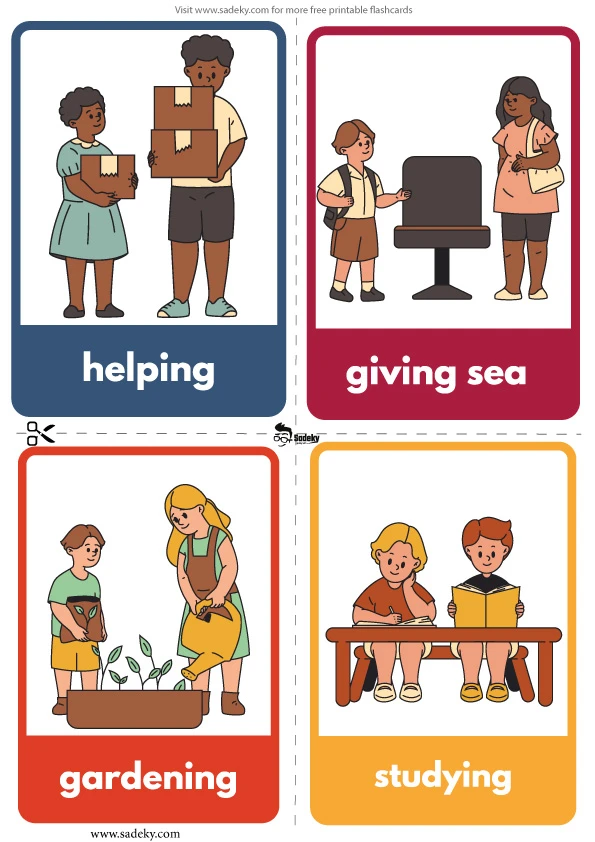
Download Kindness Flashcards For Kids FreeYou can download the free printable PDF, print the pages, and cut out the kindness cards for use at home or in the classroom. Use them as daily kindness prompts, social-emotional learning tools, or discussion cards to help children practice empathy and good behavior in a simple and meaningful way.

